
The Enigmatic World of Images
A Review of Breathing Archive, Directed by Amar Alaw
Short films generally offer a freer arena than feature-length works, particularly because they are liberated from the constraints of budget and theatrical release. The short form grants artists possibilities that feature films, in most cases, lack: freedom of action and the liberty to experiment. Since the filmmaker need not worry about commercial exhibition and can usually complete the work on a very modest budget, they are able to create according to their own vision, without regard for market demands or the expectations of a general audience. Within the world of short film, there exists a further category known as experimental. In these works, the filmmaker approaches something close to absolute freedom, for the viewers of such shorts understand that they should not bring the conventional expectations they hold for narrative short films. Unlike narrative cinema, which typically proceeds according to linear storytelling, classical character development, and dramatic rules, these films deliberately distance themselves from conventions. They treat cinema not merely as a vehicle for storytelling, but as raw material for exploring perception, time, memory, the material of film itself, and the very process of seeing.
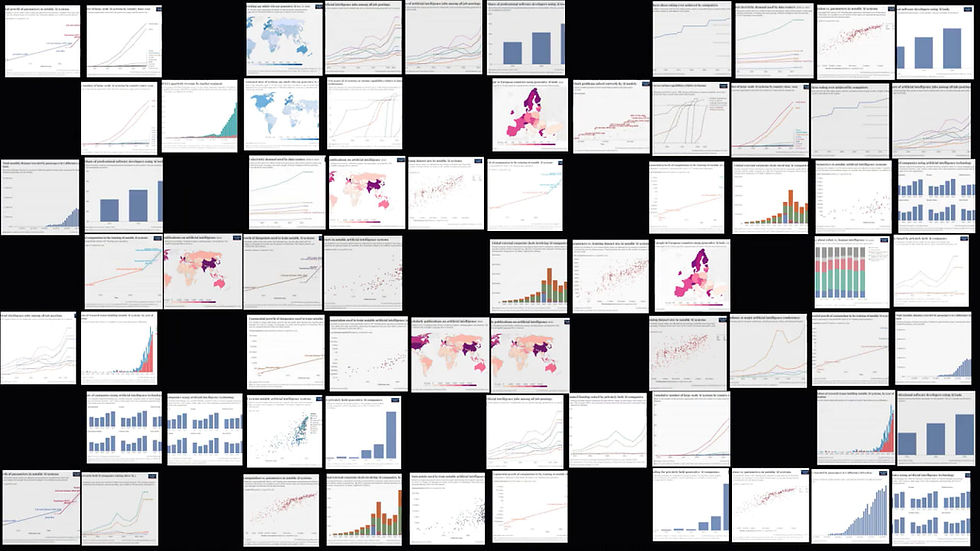
In the experimental short Breathing Archive, we encounter a notable attempt to break free from conventional filmmaking forms. Director Amar Alaw, by shattering the unwritten rules that oblige a filmmaker to remain faithful to a narrative line, moves toward a kind of anti-story film. What unfolds is a pure and undiluted experimental experience that is at once surrealist and self-reflexive, pointing back to the medium itself. In this three-minute work we are confronted with a single image—like an enormous display screen—containing eighty-four smaller images. These miniature frames, among which completely black panels also appear, each present something different that is simultaneously in a state of change. Many of them seem to display statistics, numbers, and figures, as if they were official data and information belonging to some institution. In others, maps appear, their regions differentiated by various colors, as though illustrating comparative degrees of influence of a given factor. Some of the images are simply graphs—graphs that in certain places repeat across the frame.
Given that the film’s soundtrack is empty and no sound is heard in the background, one may infer that the director intended to focus our attention as completely as possible on the images, confining us to what we see. Our concentration is directed toward these images, which function like a form of hypnosis; when we stare at them, the flow of their movements draws us along. Among these images—which sometimes repeat within a larger frame and at other times reappear in subsequent sequences with a different cycle—our eyes become aware of a kind of movement: a fluid current, a living path that seems to confer upon the medium itself the identity of the principal performer. Is it not the medium that is skillfully performing before our eyes? Is it not the medium that, through this visual hypnosis, invites its spectator into a state of numbness and paralysis?
Amar Alaw’s remarkable achievement is to confront us with a living entity called the medium—an entity whose every breath is, in fact, the flow of dozens of fluid images moving before us. A living being capable of mesmerizing us with its data, its statistics, its information, and by surrounding the viewer with these data. The film is, in essence, an account of this act of mesmerizing the spectator—the very operation that the media performs with ease through informational saturation. One may also read the film as a reminder of the method of artificial intelligence: how AI uses information and statistics to entrance us, how it disarms us. Images that were meant to be instruments of learning, that were supposed to help us acquire more knowledge about various subjects, are transformed into a dangerous entity that does not even allow us to understand what kind of information we are watching. Information itself, taking the form of a faceless being, becomes a monster. A monster that, by the power of its own data and with the aid of its various statistical tables, leaves us bound and submissive.
Another reading of Breathing Archive becomes possible through the film’s title itself. Before our eyes stands an archive that is fully alive, that breathes, that exists. Where is this archive? In our minds? Are we watching the interior of a mind? If so, the director’s critique is directed at the very process of recording and storing information in the human mind: how we daily store dozens—indeed hundreds—of different pieces of information, most of them useless and pointless, and worse, how these pieces remain alive only to disappear of their own accord and leave the mind, or remain within it yet inaccessible with any clarity. The deliberate distance and illegibility of the images serve to demonstrate that this information is of no practical use to its holder. Alternatively, if the image we see is not the interior of a mind but rather a vista of the media’s operation, we are still confronted with the same threat: images that move autonomously, change color, extinguish themselves, jump, reappear, and “breathe,” without offering any particular benefit to the spectator.
The director’s intelligent critique of the world we inhabit—a world besieged by data, maps, and information—is clearly visible in this film. It points to the fact that we, the inhabitants of today’s world, stand before a faceless giant that changes its countenance every day, that takes on a new form at every moment, and that, through its images and its archive, leaves us ever more deeply mesmerized.
The experimental short Breathing Archive is an excellent example of how a strong idea can be realized with skill and can present an intensely abstract and complex concept to its audience. An audience that, in the face of this film, experiences a remarkable sense of freedom—for they are able to draw from these images whatever conclusions they wish. And this freedom of the spectator in arriving at their own meaning is a path that begins with the director’s freedom in constructing the world of their choosing.


Comments